American perceptions of hydraulic fracturing | Yale Project on Climate Change Communication
November 24, 2013
Gas Drilling Awareness for Cortland County
November 14, 2013
October 15, 2013
Future of Fair Elections
and the role of Money

October 14, 2013

October 7, 2013
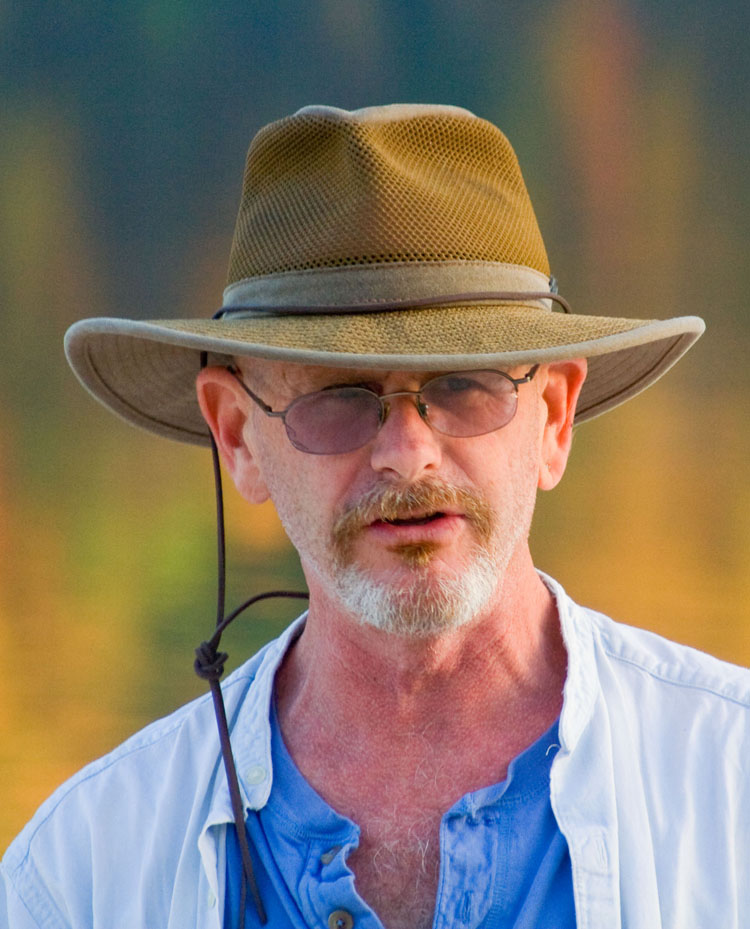 Seamus McGraw
CORTLAND, NY (10/02/2013)(readMedia)– The subject of hydrofracking for natural gas energy has become a highly charged issue in America, with everyone, seemingly, taking sides. That hasn’t stopped author Seamus McGraw, whose byline has appeared in many national magazines, from jumping right into the political fray.
The author of The End of Country, McGraw will bring his own insights based on his up-close-and-personal experience with the mining technique impact on his hometown in a SUNY Cortland lecture on Monday, Oct. 14.
McGraw’s presentation, “Finding Your Footing in a Fractured Land: The Moral and Philosophical Dilemma of Fracking,” begins at 7 p.m. in the Sperry Center Johnson Lecture Hall, Room 106.
The talk, which is free and open to the public, is sponsored by the College’s Philosophy Department, the Center for Ethics, Peace and Social Justice, and the Environmental Justice Committee of the Center for Gender and Intercultural Studies.
“There are few places where the divisions are quite as visible as New York state at the moment,” McGraw said. “When this started in Pennsylvania, you didn’t have the ossified, partisan lines there. The opposition hadn’t hardened on both sides. We were caught quite unaware. In New York, quite frankly, this had already been hijacked by – let’s just call them ‘ardent voices’ – on both sides. That’s what’s significantly different.”
McGraw is a full-time writer who has seen his work published in Playboy, Reader’s Digest, Radar, Spin and The Forward. He received the Freedom of Information Award from the Associated Press Managing Editors as well as honors from the Casey Foundation and the Society of Professional Journalists.
His 2011 book received major reviews, including one by the American radio host, activist and attorney specializing in environmental law, Robert F. Kennedy, Jr.
“Deeply personal, sometimes moving, sometimes funny, The End of Country lays out the promises and the perils faced not just by the people of one small Pennsylvania town but by our whole nation,” Kennedy wrote.
“This cautionary tale should be required reading for all those tempted by the calling cards of easy money and precarious peace of mind,” Tom Brokaw wrote. “The result too often is bitter feuds, broken dreams, a shattered landscape.”
McGraw views energy mining in upstate New York state and elsewhere around the country as probably inevitable.
“I’m a guy who used to drive around in a waste vegetable oil-powered Mercedes,” McGraw said. “For us to achieve what we all most fervently wish for – an independent, renewable energy supply – we require an infrastructure,” he said. “And in order to do that, we require some dependence on fossil fuel until we can turn around and shake it off.
“The question is, ‘What fossil fuel are we going to use?’ And the question is, ‘Are we going to police it or are we going to stand behind our ideological barricades and wave our dogma at each other?'”
Some of the greenest current solutions leave their own carbon footprint, McGraw said. He’s aware of one proposed massive California solar array project that will power 450,000 houses, for example.
“All the stuff that’s going to be used in construction of that development has to be mined, has to be manufactured, has to be shipped, has to be erected on site,” McGraw said. “That carries a fossil footprint. And the installation they are putting in has about a 30-year lifespan, which means we have to repeat this all over again in 30 years. That’s just for those 450,000 homes. There are 350 million people in America.”
SUNY Cortland Professor of Philosophy Kathryn Russell invited McGraw to speak on campus and is teaching from his book in two of her classes this semester, Environmental Ethics and Science and Its Social Context.
“The topic of ‘fracking’ in the context of climate disruption is certainly a timely one,” Russell said. “I hope McGraw’s lecture will help the issue come alive for students at SUNY Cortland. It will also give them a chance to dialogue with him.”
McGraw grew up in Susquehanna County, Pennsylvania, in the rocky, remote northeastern corner of the state, which is home to a community of stoic, low-income dairy farmers, many of them third- and fourth-generation, and more recent homesteaders seeking a haven from suburban sprawl.
He once pitched hay and spread manure on the same fields the gas companies are now prospecting, and he still lives in the woods of northeastern Pennsylvania with his wife and four children.
A battle for control has continued there since the discovery of one of the richest natural gas deposits the world has ever known, the Marcellus shale. The conflict pits the forces of corporate America against a band of locals determined to extract their fair share of the windfall, but not at the cost of their values or their way of life.
When McGraw’s own widowed mother was approached about leasing the family farm for gas exploration, he began to chronicle the experiences of his mother and her neighbors.
“When (our family) negotiated to lease, we were able to negotiate from a position of being better informed by virtue of when we did it and by observing what our neighbors had gone through,” McGraw said.
“When I do these talks, I very often raise the point. I’ll ask the people ‘what is fracking?’ There has been enough background noise for most and rudimentary information for some that people can give me a basic description. I always say, ‘That’s almost right, but you’re not cracking the rock, you’re exploiting existing fractures in the rock.’
“I argue that what’s taking place more than a mile below the surface is mirrored by what is taking place on the surface. You have these worried, divided communities that are, quite frankly, being exploited by people on both sides of the issue, which often has very little to do with the actual challenge at hand. “The question is: do we have the character to get beyond that fractious debate – the polemics – and look at this with an unjaundiced eye,” McGraw queried. “I’m not sure that we do. But if we can do this, we are going to start doing this in places like SUNY Cortland.”
He is currently working on a documentary trailer about his family’s experiences with the Marcellus shale.
For more information about McGraw’s book, visit the website at http://seamusmcgraw.com/. For more information about the talk, contact Russell at 607-753-2014.
-30-
October 7, 2013
The NYS DEC are considering regulations and permits for proposed Liquefied Natural Gas (LNG) facilities in New York State. This is just one example of a massive fracking infrastructure build out in the state. Nat Gas pipelines, compressor stations, wastewater treatment, powerplant conversions, the LPG storage facility in Seneca Lake and now LNG export facilities are in the works and are all a part of the attempt to bring fracking into the state.
We need a big show of public resistance and we need everyone to attend the meeting and rally at the first of 2 informational meetings and then hearing in Albany (on 10/30) on the proposed LNG facilities in New York.
*** We will also need your attendance at the hearing in Albany at DEC Headquarters on 10/30-info to be announced.
Syracuse LNG Meeting & Rally Against Fracking Infrastructure
Date: Wednesday, October 16, 2013
Rally and Press Conference: 12pm
Location: TBD-at the Fairgrounds near Martha Eddy Room
DEC Informational Meeting: 1:00 p.m. – 3:00 p.m.
Location: New York State Fairgrounds
581 State Fair Blvd, Martha Eddy Room
Syracuse, NY
From the DEC website:
“Notice is hereby given that the New York State Department of Environmental Conservation (NYS DEC) is proposing to adopt 6 NYCRR Part 570 to implement a permitting program for the siting, construction, and operation of Liquefied Natural Gas (LNG) facilities in New York State (NYS). LNG facilities are those that either store LNG in a tank system or convert LNG into natural gas through vaporization. The two types of facilities that NYS DEC expects to permit most frequently include facilities to fuel trucks and facilities that store LNG as a backup heating fuel.”
Read More from DEC: http://www.dec.ny.gov/enb/20130911_not0.html
Public Meetings: NYS DEC will conduct public information meetings to present the proposed regulations and respond to questions prior to the public hearing- 10/30 at DEC HQ in Albany.
Date: Wednesday, October 16, 2013
Time: 1:00 p.m. – 3:00 p.m.
Location: New York State Fairgrounds
581 State Fair Blvd, Martha Eddy Room
Syracuse, NY
Date: Wednesday, October 30, 2013
Time: 10:00 a.m. – 12:00 p.m.
Location: NYS DEC – Central Office
625 Broadway, Room 129
Albany, NY
Public Hearing: A legislative public hearing to receive public comment about the proposed rule making will be held as follows:
Date: Wednesday, October 30, 2013
Time: 2:00 p.m.
Location: NYS DEC – Central Office
625 Broadway, Room 129
Albany, NY
October 7, 2013
Anyone interested in more information or willing to help with logistics can contact Margie Rodgers at (607) 738-5232.
WATKINS GLEN — A four-day, interfaith “prayer walk” around the 80-mile circumference of Seneca Lake will begin Oct. 11 at 7:30 a.m. from Watkins Glen State Park.
The intent is to make a statement – and offer prayers – to keep Seneca Lake and its watershed free from harm, particularly from the natural gas industry, organizer Margie Rodgers said.
The walk is also supported by the organization Gas Free Seneca.
The walkers will start their trek up the west side of Seneca Lake, going about 20 miles per day, with stops for lunch and dinner. Some of the walkers will be spending the night at stops along the way. Others have indicated they will join the walk for stretches of the route.
The prayer walk will end where it started at the state park.
“People are welcome to walk a mile or all 80,” Rodgers said. Several dozen people have indicated they will be participating in the walk and blessing ceremonies to be held each morning and evening.
“I am doing this prayer walk because I love Seneca Lake. I spent summers there with my family as I grew up. My mother, grandparents and great grandparents did also,” Rodgers said.
“Seneca Lake is for generations of families to enjoy, and not a place for big gas industry and the potential harm that comes with it. I’ve written letters, protested, been arrested in civil disobedience. And yet no legislative body has changed a thing about LPG storage on Seneca. So, all I can do now is pray.”
The prayer walk was inspired by Cheryl Strayed, author of the book “Wild,” and Sharon Day, a Native American from St. Paul, Minn.
Day will participate in the Seneca Lake event.
“Every body of water has a spirit. It’s this spirit that we are communicating with as we walk,” Day said. “We are telling the water, we respect you, we love you.”
Day is the executive director of the Indigenous Peoples Task Force.
This spring Day and a group of Ojibwe women walked the length of the Mississippi River from Minnesota to the Gulf of Mexico in a similar prayer walk.
“Every step we took was a prayer for the water,” she said.
October 3, 2013
There will be a WSKG screening of “Frack You! (Stop Shouting, Start Talking)” on Sunday afternoon at 2 p.m., the Community Church of Christ, on Tompkins Street, Cortland.
BTW – WSKG is screening “Frack You! (Stop Shouting, Start Talking) Sunday afternoon at 2 PM at my church, with trained facilitators for discussion.
October 2, 2013
SAVE THE DATE: OCTOBER 30 7PM
Marcellus and Utica Shale Potential
in New York StatePublic Presentation by: Lou Allstadt, Brian Brock, Chip Northrup, and Jerry Acton
What is the potential for extracting natural gas from Marcellus and Utica shale in New York State, given the geology, current technology and economic conditions? This is a critical question for landowners, elected officials, concerned citizens, and planners. New Yorkers have been watching Pennsylvania’s production and impacts with great interest since 2008 when shale drilling began there. Now three experts in geology, drilling technologies, and the economics of the gas industry, along with a systems engineer, have studied 5 years of production records from Pennsylvania and test wells in NY. They have compiled enough information from public and industry sources to address conclusively where the Marcellus and Utica may be productive in New York, and just as importantly, where it is unlikely to be productive.
Wednesday, October 30, 7:00 pm,
Hollister Hall Auditorium (B-14),
Cornell University
For more information contact
Chip Northrup northrup49@gmail.com
Cell phone: (214) 502-6464
This event co-sponsored by: Tompkins County Council of Governments; Tompkins County League of Women Voters; Cornell Sustainability Hub, Sustainability at Ithaca College; Committee for Justice, Peace of the Integrity of Creation of Ithaca First Presbyterian Church; FracTracker; (other co-sponsors pending)
 GDACC
GDACC 

